
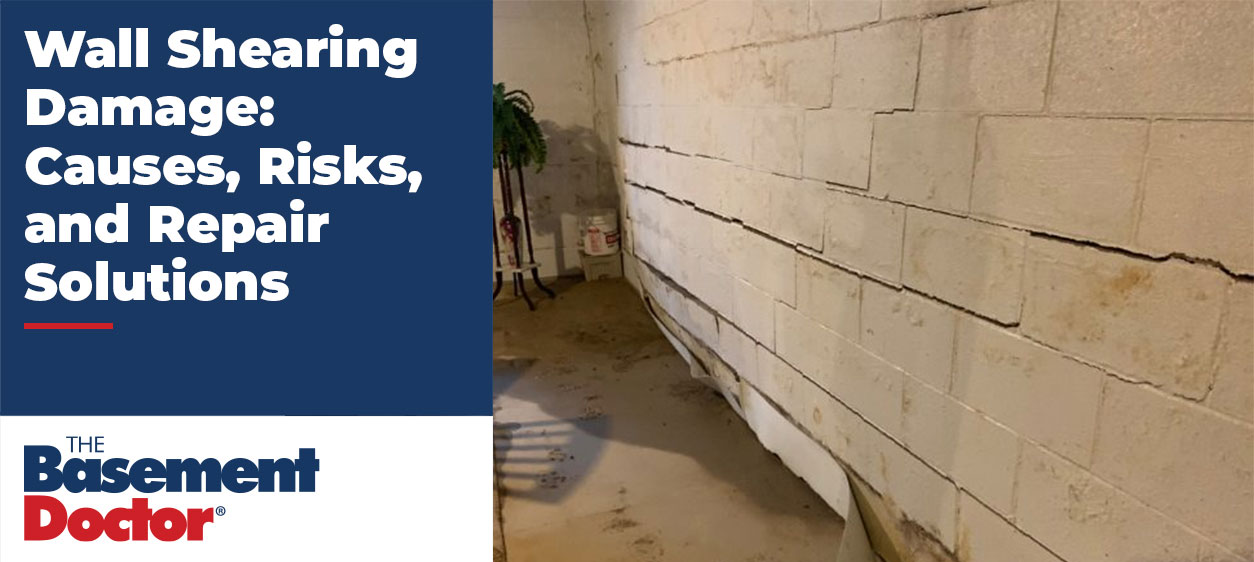
Noticing cracks along your basement walls where blocks meet? You may have foundation wall shearing—a serious structural issue affecting many Ohio homes. This occurs when soil pressure forces foundation walls to shift horizontally, creating breaks along mortar joints that compromise your home’s integrity.
Ohio’s clay-heavy soils create ideal conditions for wall shearing. These soils expand significantly when wet and contract when dry. During heavy rains, saturated soil puts intense pressure on basement walls, particularly affecting block foundations at their mortar joints.
For over 30 years, The Basement Doctor has helped Central Ohio homeowners identify and permanently fix wall shearing problems. We’ll help you recognize early warning signs, understand root causes, and implement proven foundation repair solutions to protect your home.
Understanding Wall Shearing vs. Bowing and Tilting Foundation Walls
Wall shearing creates distinct structural damage that differs from other foundation issues. Early identification ensures proper repairs before costly damage occurs.
What Wall Shearing Actually Means
Wall shearing occurs when foundation wall sections break apart. This creates horizontal or diagonal cracks as external pressure pushes against your foundation, often leading to inward bowing if untreated.
How Shearing Happens at the Bottom of Block Walls
Shearing typically begins after walls start cracking and bowing inward. The bottom blocks, embedded in your concrete floor, remain fixed while rows above move, creating a breaking point at the mortar joint between them.
The result? The upper wall section hangs over the bottom block, often showing stair-step cracks and water damage. This structural separation weakens your wall’s integrity.
Shearing vs. Bowing vs. Tilting: The Key Differences
Each foundation issue shows distinct signs:
Wall shearing: The bottom section breaks and moves inward, showing horizontal separation at mortar joints near the floor.
Wall bowing: Pressure causes middle sections to curve while ends stay fixed, creating an arc shape.
Wall tilting: The entire wall moves as one unit, typically leaning from the top while maintaining its shape.
Poured concrete walls usually bow evenly, while block walls tend to shear at mortar joints.
Why Central Ohio Block Foundations Shear So Often
Our region’s clay-rich soil creates ideal conditions for wall shearing. This soil dramatically changes volume—expanding when wet and shrinking when dry—putting immense pressure on basement walls.
Ohio’s weather intensifies the problem through freeze-thaw cycles and heavy rainfall. Winter frost heave creates upward pressure against basement walls.
Many local homes have block foundation walls with natural weak points at mortar joints. Combined with challenging soil conditions, this leads to frequent shearing problems.
How Soil Pressure Affects Different Types of Wall Movement
Movement type depends on pressure distribution:
- Shearing: Pressure concentrates at mortar joints, causing horizontal separation
- Bowing: Even pressure distribution causes middle sections to give way
- Tilting: Combined pressure and poor footing cause wall rotation
Ohio’s clay-heavy soil poses significant challenges for homeowners. When saturated, this clay can expand up to 10% in volume, exerting up to 20,000 pounds per square foot against foundation walls. This pressure concentrates at weak points, typically mortar joints, causing progressive cracking with each rainfall.
Water-Saturated Soil Becomes Much Heavier
Water-logged soil dramatically increases pressure on basement walls. With each cubic foot of water weighing over 60 pounds, saturated soil creates constant pressure that exploits foundation weaknesses, gradually worsening over time.
Poor Drainage Creates Concentrated Pressure Points
Improper drainage sets up perfect conditions for wall damage. Water collecting around foundations saturates backfilled soil more readily than undisturbed ground. Downspouts discharging directly against foundations and improper grading worsen this issue. Building code recommends a 6-inch drop within 10 feet of foundations.
Ohio’s Freeze-Thaw Cycles Add Seasonal Stress
Central Ohio winters create additional pressure through frost heave, requiring three conditions: frost-susceptible soil, moisture, and freezing temperatures. These cycles gradually weaken foundations.
Repeated Pressure Cycles Weaken Foundations Over Time
Foundation walls experience “cyclic loading” from soil changes and moisture fluctuations. Over time, mortar joints and concrete blocks weaken until they can’t resist soil pressure, explaining sudden failures after years of minor issues.
Our experts understand these regional factors and provide early intervention to prevent major structural problems.
Worried About Foundation Problems? Here’s What to Look For
Early detection of wall shearing can prevent costly repairs. Watch for these key warning signs before they become dangerous structural issues.
Horizontal Cracks Running Along Mortar Joints
Horizontal cracks in block foundation walls, especially in middle or lower sections, indicate serious external pressure. Unlike normal settling cracks, these signal the wall is being pushed inward. Watch for cracks wide enough for a pencil or any growing fractures.
Wall Pulling Away From the Floor
Check for foundation walls separating from concrete floors. This occurs when soil pressure forces upper blocks inward while bottom blocks remain anchored, creating visible misalignment that needs immediate attention.
Stair-Step Cracks and Other Indicators
Look for zigzag cracks following mortar joints near corners, signaling uneven pressure. Also check for:
- Gaps between basement floors and walls wider than ¼ inch
- Subtle bulging in lower wall sections
- Deteriorating mortar between blocks
Regular basement inspections help catch these issues early. Our foundation experts can assess whether symptoms indicate beginning wall shearing and recommend effective solutions.
When Wall Shearing Becomes Dangerous
Foundation problems worsen progressively over time. Understanding when wall shearing transitions from concerning to structurally dangerous helps protect your home and family.
Movement Greater Than ¼ Inch Demands Attention
Wall displacement beyond ¼ inch indicates serious structural issues. Lateral movements exceeding ½ inch or gaps between wall segments signal major foundation compromise. Cracks wider than 1/8 inch need professional evaluation due to significant foundation stress.
Cracks That Grow Quickly
Rapidly expanding wall cracks over weeks or months indicate alarming structural movement. New or widening cracks during monitoring require immediate expert assessment, as active movement won’t resolve naturally.
Seasonal Movement Patterns
Walls shifting during wet seasons indicate compromised resistance to soil pressure. Ohio’s clay soils’ moisture-driven expansion cycles gradually weaken foundations, risking sudden failure in extreme weather.
Secondary Problems Throughout Your Home
Foundation issues often spread, showing these warning signs:
- Sticking doors/windows with uneven gaps
- Progressive floor unevenness
- Water seepage through foundation
- Multiple cracks across different areas
These symptoms indicate widespread structural impact.
Walls Losing the Battle Against Soil Pressure
Foundation walls must resist lateral soil pressure. Bowing or bulging indicates failure of this core function. Bottom wall inward movement signals active shearing from overwhelming soil pressure.
Professional Assessment Points to Immediate Action
Structural engineers provide crucial danger assessments by evaluating symptoms, causes, and risks. We recommend expert consultation for horizontal or stair-step cracks with wall movement, as these typically need specialized reinforcement. Quick intervention prevents serious complications and reduces repair costs.
Focus on your basement walls’ middle and lower sections. Horizontal cracks along mortar joints here indicate pressure problems. Even thin lines need attention as they worsen with increasing soil pressure.
Inspect Foundation Corners Carefully
Check corners for stair-step cracks along mortar joints. These diagonal fractures at weak points often signal future movement.
Look Behind Finished Surfaces
Wall issues may hide behind insulation or paneling. Check lower walls for bulging by removing small sections and feeling for subtle movements.
Walk Around Your Home’s Exterior
Ground should slope away 6 inches within 10 feet from your house. Poor grading causes wet soil and wall shearing. Ensure downspouts direct water away from foundation.
Test Your Basement Windows
Sticking windows or uneven gaps indicate wall movement. Previously smooth-operating windows needing force suggest developing foundation issues.
Regular inspections help catch warning signs before costly repairs. Our experts know exactly what to look for regarding wall movement.
Proven Repair Solutions: How We Stop Wall Shearing and Protect Your Foundation
For foundation wall shearing, we offer permanent solutions restoring structural integrity. With 30+ years fixing Ohio foundations, we know which repairs work best.
Wall anchors work differently by gradually pulling sheared walls back to their original position. We connect interior plates to exterior anchors in stable soil, creating a system that straightens walls during natural soil cycles. Our adaptable anchor design works at any angle for maximum effectiveness.
Foundation Underpinning: Deep Stabilization When Soil Movement is Severe
For severe wall shearing indicating deeper issues, we use underpinning. Steel piers extend your foundation into stable soil layers, transferring weight to solid ground to prevent future movement.
Our Assessment Process: Choosing the Right Solution for Your Home
We begin with thorough inspections to assess wall movement extent and causes. Our team measures displacement, analyzes cracks, and evaluates soil and structural factors to recommend the most effective solution.
Long-Term Benefits: More Than Just Stopping Movement
Professional foundation reinforcement provides lasting value by restoring structural integrity, stopping water intrusion, preventing damage, and protecting your investment. Our solutions address root causes for permanent protection, backed by warranties.
Protect Your Home’s Foundation—and Your Peace of Mind
Foundation wall shearing requires immediate attention. Your home is a major investment needing protection from Ohio’s challenging soils.
You now recognize early warning signs before they become costly. We offer proven solutions – from carbon fiber to steel beams to wall anchors. Foundation issues worsen with time, so act now while repairs cost less.
Since 1987, we’ve protected Ohio homes with permanent solutions and expert service you can trust.
Call us today for a FREE inspection. Our foundation repair experts will assess your foundation and help you choose the right solution for your home.