
Water in your basement doesn’t announce itself with much warning. For many Newark homeowners, it shows up as a thin trickle along the wall after a spring storm — and before long, that small problem becomes a costly one. Wet basements affect 60% of homes at some point, and most issues start small before the damage adds up.
Homeowners across Licking County — Newark, Heath, Granville, Pataskala, Johnstown, and Hebron — deal with this same challenge. Freeze-thaw cycles and saturated soil put constant pressure on foundation walls throughout the year, making a wet basement one of the most common concerns in Central Ohio.
Your home is one of your biggest investments. Understanding why water is getting in — and knowing which solutions actually last — makes all the difference. This guide covers the most common causes of wet basements in Licking County, the basement waterproofing options available to Newark, Ohio homeowners, and how a free basement inspection can point you toward the right fix.
Why Is My Basement Wet? Common Causes in Licking County
For most Licking County homes, the answer is water pressure — building against your foundation faster than the soil around it can drain away. A wet basement rarely has one single cause. Your home’s age, soil type, and distance from local waterways all play a part.
Heavy Rain, Saturated Soil, and Groundwater Pressure
Once Ohio soil becomes fully saturated, water has nowhere left to go except against your foundation walls. That pressure forces moisture through hairline cracks, mortar joints, and the floor-wall joint — regardless of how small the opening is. Freeze-thaw cycles make things worse. Freezing soil expands; thawing soil contracts — and each temperature swing opens new pathways for water to find its way in.
How Local Soil Affects Drainage
Clay-heavy glacial soil is common throughout Licking County, and it holds water rather than letting it drain. The USDA’s Web Soil Survey lets you check your own property’s drainage class, rating soils from excessively drained to very poorly drained based on how long water sits near the surface. If your lot scores poorly, that slow drainage is likely working against your foundation every time it rains.
Older Foundations in Newark and Granville
Historic neighborhoods in Newark and Granville often sit on block or stone foundations built under earlier codes — more joints, more porous material, and less resistance to moisture than today’s poured concrete standards. Our field team checks these joints first. Minor cracks here tend to widen quickly once clay soil starts expanding each spring.
Homes Near Waterways
Properties near the Licking River or Raccoon Creek face a higher water table. FEMA flood maps for these areas are available through Licking County’s floodplain viewer and USGS inundation mapping tools. If your home sits in a mapped flood zone, watch for signs of a high water table even during dry weeks — not just after heavy rain.
Grading, Gutters, and Downspouts
A single inch of rain drops roughly 1,250 gallons onto the roof of a 2,000-square-foot home. Clogged gutters or downspouts that discharge too close to the foundation send much of that water straight into the soil beside your basement wall. Grading that slopes toward the house — rather than away from it — only adds to the problem.
What Local Inspections Turn Up in Heath, Pataskala, Johnstown, and Hebron
Across these communities, inspections reveal a consistent mix: older block foundations in established neighborhoods, newer subdivisions built on heavier clay soils, and grading problems tied to how individual lots were developed. Newer subdivisions in Pataskala and Johnstown often sit on heavier clay fill. No two homes are identical, but the underlying pressures on the foundation are familiar ones.
Signs of a Wet Basement and What to Do First
Water in your basement rarely stays quiet. It leaves clues — and catching those clues early can save you from a much bigger repair bill down the road.
Basement Leaks After Rain: Water at the Floor-Wall Joint
The cove joint — where your basement wall meets the floor — is one of the most common places water gets in. It’s not a sealed seam. It’s a structural gap, and when pressure builds beneath the slab after heavy rain, water pushes right up through it. If your basement leaks after rain keep appearing along that same line, saturated soil pressing against your foundation is almost always the cause.
Water Seeping Through Basement Walls or Floors: Efflorescence and Peeling Paint
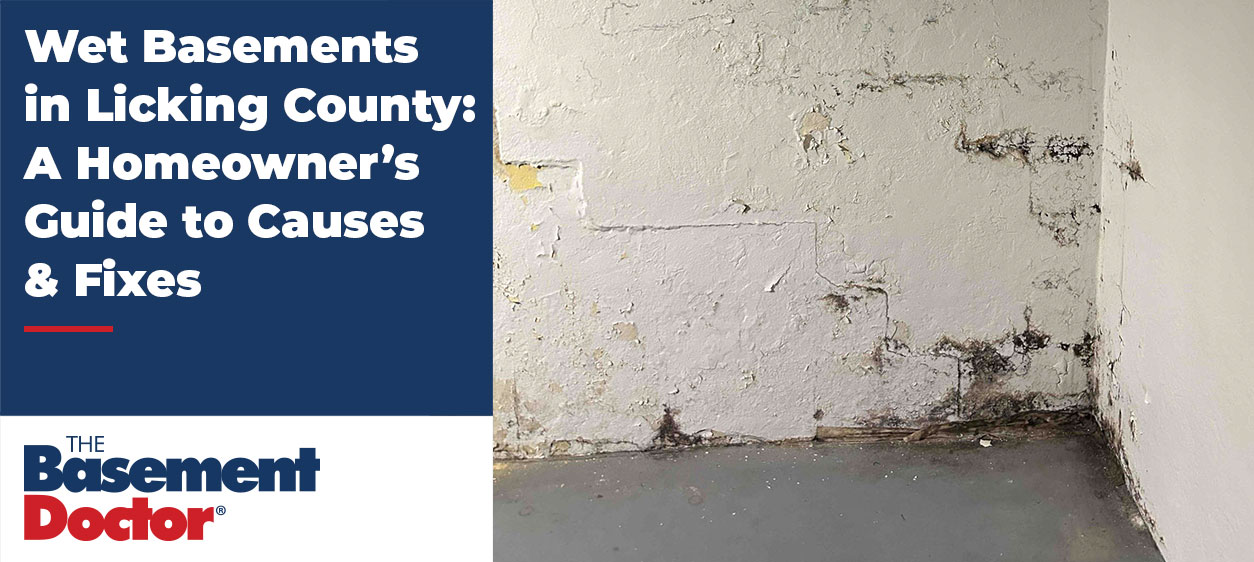
Dealing with white, chalky deposits on your basement walls? That mineral buildup — left behind as water moves through concrete — is a clear sign of water seeping through basement walls or floors. Peeling paint near the base of the wall tells the same story. Trapped moisture works through porous concrete and pushes the coating right off from underneath.
Musty Smells, Rust, and Basement Window Well Leaks
A musty smell, rust on appliances or exposed metal, and basement window well leaks all point to excess moisture building up over time. Window wells without proper drainage fill fast during storms. Once full, water presses against the frame and finds its way inside.
Condensation or Seepage? What the Foil Test Can Show
Not sure where the moisture is coming from? Tape a piece of foil to the damp wall and check it after 24 hours. Moisture on the wall side points to outside seepage. Moisture on the room side points to condensation. It’s a useful first step — though it won’t tell you how severe the underlying crack or pressure problem actually is.
What to Do Right Away
- Stay clear of outlets and wiring near any standing water.
- Move belongings off the floor.
- Photograph the damage for your records.
- Run a dehumidifier once it’s safe — mold can begin growing within 24 to 48 hours of water exposure.
Basement Waterproofing in Newark, Ohio: Match the Fix to the Cause
Fixing a wet basement in Licking County starts with finding the actual source of water — not covering it up with a quick patch and hoping for the best.
Start Outside: Clean Gutters, Extend Downspouts, and Correct Grading
Before any interior work begins, address what’s happening on the outside. Clear your gutters and extend downspouts well past the foundation. Burying discharge lines and directing roof runoff away from your home keeps water from pooling against your basement wall in the first place.
Interior Basement Waterproofing: Drainage, Sump Pumps, and Backup Power
Interior basement waterproofing systems catch water at the footer — right along the floor-wall joint — before pressure has a chance to build, then route it to a sump pump. A dependable sump pump setup needs battery backup, a sealed lid to stop evaporation, and a check valve so water can’t flow back in. Our experts will make sure yours is equipped to handle whatever Licking County weather brings.
Crack Sealing and Wall Vapor Barriers: Why Paint Alone Won’t Cut It
Epoxy and polyurethane injections seal foundation cracks while allowing the wall to flex with normal seasonal movement — something paint and store-bought fillers simply cannot do. Waterproofing stops liquid water under pressure, while a vapor barrier only slows vapor. A wall under active water pressure needs proper waterproofing first, not a coat of paint.
Dehumidification and Mold Prevention
Once the water source is under control, dehumidifiers pull up to 100 pints of moisture from basement air daily, filtering out mold spores and allergens along the way. It’s the final step in giving your basement cleaner, healthier air.
Bowing Walls or Wet Crawl Spaces: Foundation and Crawl Space Repairs
Concerned about your home’s structure? Clay soil expands and contracts by as much as 15% between wet and dry seasons, generating pressure that can exceed 2,000 pounds per square foot against your foundation walls — enough to bow block walls that then need carbon fiber straps or wall anchors. Crawl spaces face the same moisture problem, and encapsulation with proper drainage protects the wood structure below your first floor from rot. Foundation repair and crawl space repair in Newark both start with that same pressure diagnosis.
Let The Basement Doctor Find the Right Fix for Your Home
Every home is different. A free basement inspection matches the solution to your home’s actual cause — whether that means basement waterproofing in Newark or crawl space work across Heath, Granville, Pataskala, Johnstown, and Hebron. You can count on us to identify the problem clearly and walk you through your options before any work begins.
Frequently Asked Questions About Wet Basements in Licking County
Water where it shouldn’t be raises a lot of questions. Here are straight answers to what Licking County homeowners ask most.
Why does my basement leak after heavy rain? Saturated soil has nowhere to send water — so it pushes against your foundation. That pressure forces moisture through cracks, mortar joints, and the floor-wall joint once the ground can’t absorb any more runoff.
Is a wet basement normal in older Newark homes? It’s common, but it’s not something you have to live with. Aging drainage systems, deteriorating concrete, and settling soil make older homes more vulnerable to water issues — though the right drainage and sealing approach can fix them.
Do I need a sump pump in Licking County? Most homes benefit from one. Some local codes even require a primary pump plus a battery-backed secondary for homes in a floodway or floodplain. A properly set-up sump system is one of the most dependable defenses against a wet basement.
Can I waterproof my basement without digging up my yard? Yes. Interior drain tile, crack injections, and sump systems resolve most seepage problems from inside the basement — no excavation, no landscaping damage.
Does homeowners insurance cover a wet basement? It depends on the source. Groundwater and surface flooding are typically excluded from standard policies, while sudden plumbing failures are often covered. Check with your agent before assuming either way.
How much does basement waterproofing cost in Licking County? Cost varies based on what the fix actually requires — crack repair, a drainage system, or full waterproofing each involve different labor and materials. A free inspection with The Basement Doctor gives you a clear picture of what your home needs and what it will cost.
Contact Your Local Basement Experts
Wet basements in Licking County are fixable — but only when the repair matches the actual cause. Quick patches and paint don’t address water pressure. The right drainage, sealing, and waterproofing solutions do.
Whether your home is in Newark, Heath, Granville, Pataskala, Johnstown, or Hebron, our team is ready to help you find the right answer for your foundation. Schedule a free basement inspection with The Basement Doctor today, and get the dry, protected basement your home deserves for years to come.