
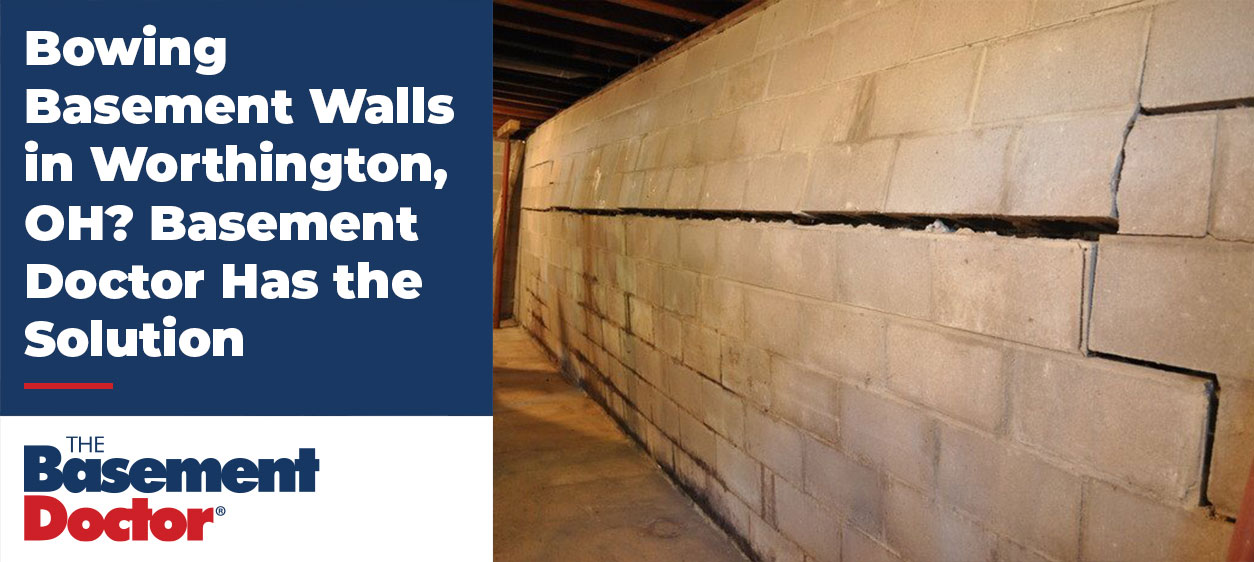
Concerned about inward-pushing basement walls? You’re not alone—bowing basement walls affect many homes nationwide, often due to expansive soil damage. In Ohio, with over 40 inches of annual rainfall and 15+ inches of snow, this issue—especially bowing basement walls— is particularly common as moisture builds pressure against foundation walls.
The stakes are high when ignoring these warning signs. Each inch of rainfall adds 1,250 gallons of water around a typical 2,000-square-foot home. Without proper drainage, this leads to costly foundation damage. At The Basement Doctor, we know that saturated clay soils typically cause walls to bow inward.
Since 1987, we’ve helped Worthington homeowners fix bowing basement walls using proven methods. We provide professional solutions tailored to your specific needs, ensuring safe and effective repairs.
What Signs Indicate Early‑Stage Wall Movement Before Bowing Basement Walls Become Severe?
Early detection can save thousands in repair costs. Watch for these warning signs:
- Subtle horizontal cracks along the middle of the wall. These cracks indicate significant pressure and need immediate assessment.
- Small stair‑step cracks in concrete block walls These zigzag patterns often appear at corners or near openings.
- Gaps forming where the floor meets the wall. These separations indicate wall movement and potential water entry points.
- Slight inward curves or bulges detectable by sight or straightedge
Before bowing basement walls become severe, walls may show subtle inward curves that most homeowners miss. Using a straightedge against your basement wall can reveal minor bulging, indicating excessive soil pressure against your foundation.
Windows or doors in the basement beginning to stick
Previously, smooth-operating doors or windows that suddenly become difficult to use often indicate early foundation movement. As walls shift, these openings become misaligned, causing locks to misalign or windows to stick.
Musty smells caused by new moisture pathways forming
New or stronger musty odors might signal that wall movement has created moisture entry points. These small cracks allow water vapor infiltration before visible leaks appear, creating conditions for mold growth.
Foundation walls deteriorate gradually. Our Basement Doctor team specializes in catching these early signs and implementing proper repairs before severe damage occurs.
When Should a Homeowner Call a Professional About Bowing Basement Walls—What are the Red‑Flag Warning Signs?
Some warning signs demand immediate attention. At The Basement Doctor, we’ve witnessed how quickly foundation problems can escalate when critical signals go unaddressed. Watch for these red flags:
- Cracks growing wider than 1/8 inch
Cracks exceeding 1/8 inch (nickel thickness) indicate serious structural issues needing expert evaluation. These widening fissures show ongoing foundation movement that requires professional intervention.
- Noticeable inward movement of the wall
Once a wall visibly bulges inward, you’re facing advanced bowing. Walls showing over 2 inches of inward movement need immediate repair to prevent potential collapse.
The cove joint—where your basement floor meets the wall—is a key inspection point. Watch for gaps or separations here, as they signal wall movement and allow moisture entry.
Middle sections of concrete block walls, where bowing begins
Focus on the center of your basement walls, as this area typically shows initial stress signs. Being furthest from corner support, this zone reveals early pressure damage through cracking.
Corners showing stair‑step cracks
Look for distinctive zigzag cracks along mortar joints at corners, especially in block foundations. These stair-step patterns indicate early foundation shifting.
Hidden areas behind wall coverings
Check behind insulation or paneling—seemingly straight panels may hide significant wall issues. Remove a section to inspect, as trapped moisture can mask serious problems.
Window frame distortion
Examine window frames for squareness. Diagonal cracks from corners or operational issues suggest wall movement. Poor gutter placement near windows often causes damaging splash-back.
External foundation signs
Check for water pooling after rain and soil heaving around your foundation. These issues create damaging wall pressure.
Need help with inspection? Our team knows exactly what to check.
Why do some homes show bowing while others don’t?
At The Basement Doctor, we often see varying foundation conditions among Worthington neighbors. Three main factors typically cause these differences:
- Clay-heavy soil pockets that expand significantly with moisture
- Negative grading directing water toward foundations
- Compromised gutter systems concentrating water damage
Tree Placement Affects Soil Moisture
Tree roots extending 2-3 times beyond their canopy can draw moisture or push against walls, creating different soil conditions than open yards.
Foundation Age and Construction Methods Matter
Older foundations and those with minimal reinforcement are more vulnerable. Block walls with thin mortar typically fail before poured concrete. Construction standards for wall thickness and reinforcement have evolved over time.
Quality is crucial for home protection. These factors explain why foundation issues vary across neighborhoods based on specific property conditions.
How Do Repair Systems Like Carbon Fiber, Steel I-Beams, or Wall Anchors Stop Further Bowing?
For Worthington homeowners facing bowing walls, we offer three proven solutions based on your specific needs.
Carbon fiber straps: Best for early-stage bowing, minimal intrusion
These high-strength straps bond directly to walls showing early movement. They’re 10 times stronger than steel by weight, maintain a low profile, and work best for walls bowing less than 2 inches.
Steel I-beams: Rigid support for moderate to severe bowing
Our I-beam system provides immediate stabilization and potential wall straightening through adjustable I-beams.
Wall anchors: Tie wall to stable soil and allow gradual correction
Our Wall Anchor System counteracts soil pressure and enables gradual wall straightening through periodic tightening.
How We Determine the Right System for Your Home
We assess wall movement, soil conditions, and construction type to recommend the best solution.
Why Professional Installation Matters for Your Peace of Mind
Our certified technicians ensure proper installation and address underlying causes, backed by warranties.
Don’t Wait—Protect Your Worthington Home Today
Bowing basement walls threaten your home’s structure, especially with Central Ohio’s challenging soil and weather conditions.
Early warning signs like horizontal cracks, floor separations, and sticking doors won’t resolve themselves. Acting quickly keeps solutions simpler and more affordable.
Each home faces unique challenges based on soil composition, drainage, and construction methods. What works for your neighbor may not suit your situation.
With over 30 years serving Worthington homeowners, our proven repair systems effectively stop wall movement and protect your investment. We match the right solution to your specific needs.
Don’t let foundation issues worsen. Trust our Worthington basement and foundation repair specialists to secure your foundation and protect your family.
Contact The Basement Doctor today for your free foundation inspection.