
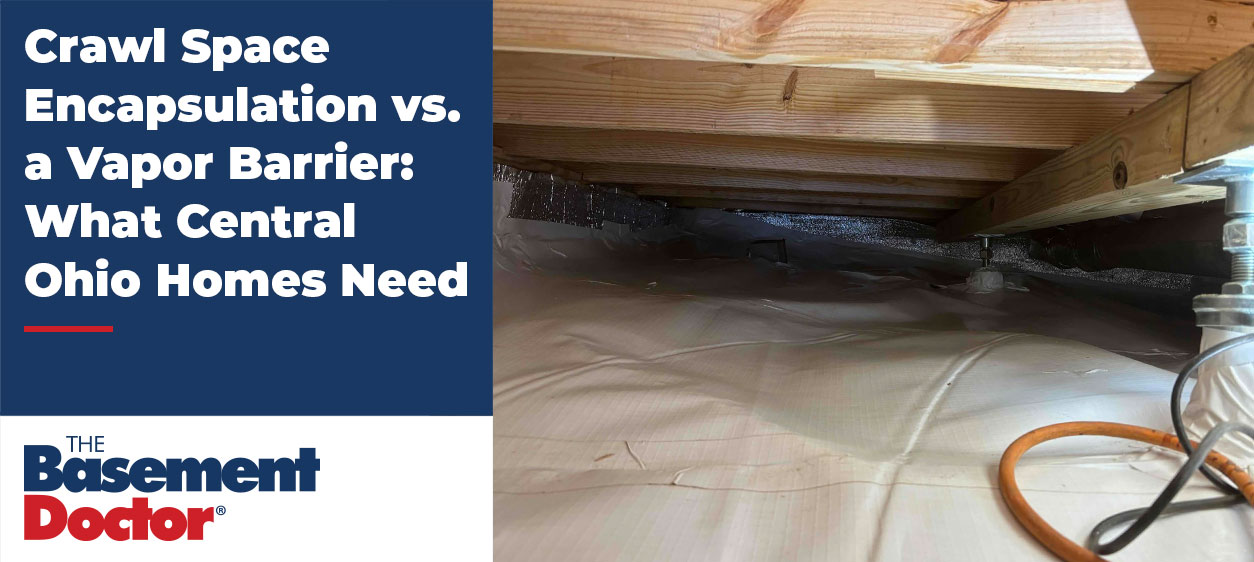
Musty smells drifting upstairs. Cold floors in the living room. An inspector flagging a torn liner under your home. These are the moments Central Ohio homeowners start asking whether crawl space encapsulation or a vapor barrier is the right call.
Both methods tackle crawl space moisture, but they differ significantly in how much protection they actually deliver. Vapor barrier projects typically run between $1,500 and $4,000, while full encapsulation can range from $1,500 to $15,000 depending on the scope. Knowing which one your home needs saves you money and prevents bigger problems down the road.
Wondering, “do I need crawl space encapsulation?” We’ll walk you through how crawl space moisture, crawl space humidity, and crawl space vents affect Central Ohio homes, what warning signs like mold and sagging floors actually mean, and how to make the right decision for your home. When you’re ready, The Basement Doctor offers a free crawl space inspection so you get answers, not guesswork.
Crawl Space Encapsulation vs. Vapor Barrier: What Is the Difference?
Both methods target crawl space moisture, but they work very differently under your home. Understanding what each one actually does makes it easier to choose the right solution for a Central Ohio foundation.
A crawl space vapor barrier is a plastic sheet laid over the crawl space floor to slow ground moisture from rising. Crawl space encapsulation goes further: a heavier liner covers both the floor and the walls, seams and vents get sealed, and humidity is actively controlled. In humid Central Ohio, a vapor barrier alone often falls short once a space turns musty, stays damp, or remains vented.
What Is a Crawl Space Vapor Barrier?
A crawl space vapor barrier is typically a polyethylene sheet between 3 and 6 mils thick, laid loosely across the dirt floor. Vents usually stay open, and the liner stops at the foundation walls instead of climbing them. This option slows moisture rising from the soil and costs less upfront, often running between $1,500 and $4,000 for labor and materials. Even so, it won’t stop humid outside air from moving through open vents. Thinner sheets can also tear, shift, or bunch up within 5 to 10 years.
What Is Crawl Space Encapsulation?
Crawl space encapsulation uses a thicker liner, often 12 to 20 mils, covering the floor and walls with seams taped and fully sealed. Vents and rim joists are sealed as part of the job, and a dehumidifier is added where the installer offers it. Sealed, conditioned crawl spaces have been tied to annual heating and cooling savings near 15%.
Vapor Barrier vs. Encapsulation: A Quick Comparison
| Feature | Vapor Barrier | Encapsulation |
| Floor/wall coverage | Floor only | Floor + walls |
| Liner durability | 3-6 mil, 5-10 year lifespan | 12-20 mil, puncture-resistant |
| Vents | Left open | Sealed |
| Humidity control | Passive only | Dehumidifier possible |
| Air quality/energy use | Modest improvement | Greater improvement |
| Upfront cost | Lower, roughly $1,500-$4,000 | Higher, roughly $1,500-$15,000 |
| Lifespan | Shorter, needs monitoring | Longer with a sealed system |
| Warranty | Limited | Up to 25 years on some systems |
Liner thickness, sealing scope, and warranty terms vary between contractors. Before signing anything, confirm these details directly with your installer, since not every crawl space encapsulation quote covers the same scope as the next.
Why Central Ohio Crawl Spaces Struggle With Moisture
Ohio’s clay-heavy soil and freeze-thaw winters create the perfect conditions for crawl space moisture problems. This isn’t a one-time issue after a heavy storm — it’s an ongoing battle that gets worse without the right protection.
Here’s what’s happening under your home. Exposed dirt floors release 10 to 15 gallons of water vapor every single day, and that moisture works its way into subfloor framing over time. Open crawl space vents make it worse. When humid summer air at 77 degrees meets crawl space surfaces sitting around 62 degrees, condensation forms rapidly — pushing relative humidity above 100% and settling directly onto joists and ductwork. Poor grading, clogged gutters, saturated clay soil, foundation cracks, and plumbing leaks all push water inward from multiple directions. Homes near Delaware, Powell, and Newark often face an added challenge: a high water table that can force groundwater above the crawl space floor after heavy rainfall. Because of the stack effect, that musty air from below doesn’t stay below — it gets pulled straight up into your living spaces.
Worried your crawl space has crossed the line? Certain warning signs tell you a basic vapor barrier isn’t cutting it anymore. A musty smell upstairs, condensation on ducts or joists, a torn liner, standing water, visible mold, sagging floors, and pest activity all point to ground moisture that has outpaced a simple liner. When wood moisture levels climb above 20%, decay fungi activate and slowly weaken joists until floors start to feel soft or bounce underfoot. Clay soil swelling and shrinking beneath the foundation adds even more stress to that sagging over time.
Not sure what your crawl space actually needs? Book a free crawl space inspection before committing to any repair. A trained technician can trace the real source — whether it’s grading, a high water table, or a failed liner — so you’re fixing the right problem, not guessing at it. Contact us today.
What a Professional Crawl Space Encapsulation Includes
A proper crawl space encapsulation job covers several layers of protection, not just one sheet of plastic on the floor. Here’s what a fully scoped installation typically includes, and what to confirm with your installer before work begins.
Heavy-duty floor and wall liners: A reinforced polyethylene liner, often rated 10 to 20 mil, covers the dirt floor and extends up the foundation walls. Seams, piers, and penetrations get sealed and mechanically fastened for a continuous barrier. Some installers back this work with a liner warranty lasting up to 25 years. Ask what thickness and material the crew plans to use before work starts.
Sealed vents, rim joists, and access doors: Solid vent covers close off old foundation openings. Closed-cell spray foam seals rim joists and pipe penetrations, and the access door gets upgraded to match the sealed environment. Codes may still require a small gap near the top of masonry walls for termite inspection, so confirm local requirements with your contractor before sealing.
Dehumidification: A crawl space dehumidifier, where offered, keeps relative humidity below 60% once the space is sealed. Professional units run in capacities from 50 to 110 pints per day. Confirm whether this equipment is included in your package or billed separately before signing.
Drainage and sump pumps: Dealing with standing water or a high water table? A sump pump and perimeter drainage system route water away from the foundation before the liner goes down, since encapsulation alone won’t stop water rising from below. Include this step only if your installer offers it as part of their scope.
Repairs and mold cleanup: Visible mold, wood rot, or pest damage needs remediation first. Sealing over active mold traps spores and worsens air quality instead of fixing it. Our team identifies these issues upfront so nothing gets buried under the liner.
Do I Need Crawl Space Encapsulation or Just a Vapor Barrier?
Deciding between a crawl space vapor barrier and full encapsulation comes down to one question: how much moisture is your crawl space actually dealing with?
When is a vapor barrier enough — and when does encapsulation make more sense?
A vapor barrier works well if the space is dry, unvented, and not directly below living areas. Once you’re dealing with musty air, condensation on ducts or joists, standing water, or humid air coming through open vents, encapsulation is the stronger fix — especially where bedrooms or living rooms sit directly above.
What affects crawl space encapsulation cost in Columbus?
Square footage, liner thickness, wall height, sealing scope, and whether a dehumidifier or drainage system gets added all influence the final number. Crawl space encapsulation in Columbus pricing should always come with a written warranty covering both materials and labor. Get the scope in writing before work begins.
Should crawl space vents be open or closed?
Closed, once the space is properly sealed. Building code allows vent closure when a Class 1 vapor retarder is installed and the space receives conditioned air. Open vents pull humid summer air into a cool space, and that’s where condensation problems start.
Does an encapsulated crawl space need a dehumidifier?
Where offered, yes. A crawl space dehumidifier keeps relative humidity in check after sealing and protects the work long-term.
Can I install a vapor barrier myself?
Retail plastic sheeting is thin, tears easily, and rarely seals well around piers and penetrations. It needs replacement far sooner than a professionally installed liner.
Will encapsulation eliminate existing mold?
No — and this is important. Encapsulation stops the moisture mold needs to grow, but active mold growth requires cleanup before any sealing work begins. Sealing over existing mold traps spores and worsens air quality.
Still not sure which option fits your home? Book your free crawl space inspection and let our experts trace the real cause before you decide.
Conclusion
Your Central Ohio crawl space deserves more than a guessing game. A basic vapor barrier slows ground moisture. Full encapsulation seals the space, controls humidity, and protects your home for the long haul. The right choice depends on what’s actually happening under your home.
Your home is one of your biggest investments. Don’t let a damp, vented crawl space quietly work against it.
The Basement Doctor is ready to help. Schedule your free crawl space inspection, ask about crawl space encapsulation in Columbus, or explore financing options,. We’ll take it from there.