
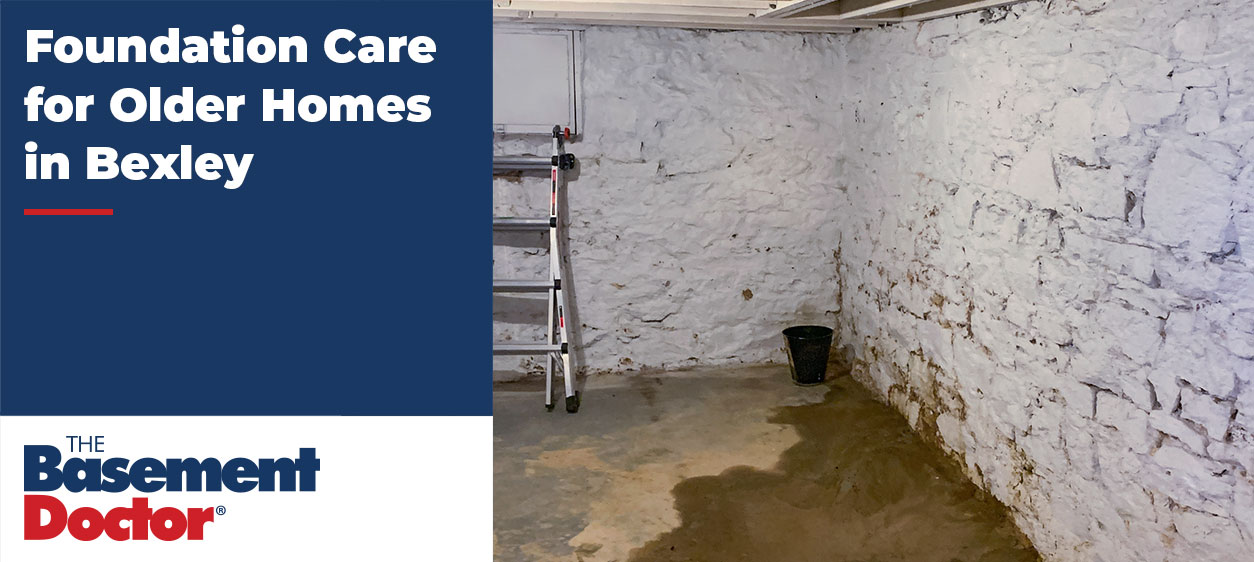
Bexley’s older homes carry nearly a century of history — and a century’s worth of wear on the stone, brick, and block foundations beneath them. Most were built before the 1930s, with materials that have held up through decades of Central Ohio seasons. Clay soil, mature trees, and aging drainage systems surround these properties today. Small cracks or sticking doors may seem minor, but they often point to something worth a closer look.
This guide covers common old house foundation problems, foundation cracks in older homes, and warning signs like bowing walls or sagging floors. You’ll also find a seasonal foundation maintenance checklist, guidance on historic home foundation repair, and advice on when to schedule foundation repair in Bexley, Ohio.
Why Older Bexley Homes Need Extra Foundation Care
Bexley’s historic homes were built with real craftsmanship — but long before modern building codes. That gap between then and now shapes most old house foundation problems you’ll see today.
Older Materials: Worn Mortar in Stone, Brick, and Early Block Foundations
Stone, brick, and early block foundations were set with lime mortar that softens with age. Decades of moisture cycling break down mortar joints, loosen stones, and open the door to water intrusion. Caught early, crumbling mortar or loose stones are very fixable. Historic home foundation repair here means matching the original materials — not replacing them outright — so the wall performs the way it was built to.
Mature Trees: Root Growth and Changes in Soil Moisture
Dealing with large trees near your foundation? The concern isn’t usually roots breaking through concrete. Mature trees pull moisture from surrounding soil, and in Bexley’s expansive clay, that drying and shrinking can shift a foundation over time. When cracks, sticking doors, or uneven floors appear on the same side as a large tree canopy, that’s worth paying attention to.
Aging Drainage: Clogged or Collapsed Clay Tile Drains and Connected Downspouts
Clay tile drains installed decades ago collapse and clog with age. When downspouts connected to those systems discharge too close to the house, runoff concentrates right at the foundation wall. Short or disconnected downspout extensions are one of the most common — and most fixable — drivers of basement moisture in older homes.
Local Conditions: Clay Soil, Freeze-Thaw Cycles, and Moisture Concerns Near Alum Creek
Bexley’s clay soil swells when wet and shrinks when dry. Add winter’s freeze-thaw cycles, and basement walls absorb significant pressure every year. Homes near Alum Creek carry additional moisture exposure. When you’re considering foundation repair in Bexley, local soil behavior belongs in that conversation.
Warning Signs Worth Watching
Concerned about what you’re seeing? Keep an eye out for cracking walls that widen over time, bowing walls, sagging floor joists, sticking doors, trim gaps pulling away from walls, dampness, signs of a high water table, and efflorescence on masonry surfaces. These aren’t things to set aside and revisit later.
Normal Settling or a Real Problem?
Hairline cracks under 1/16 inch that stay stable are usually cosmetic. Horizontal cracks, cracks that widen, or cracks that let water through are a different story — those call for a professional look. Not sure where yours falls? Book a free foundation inspection and get a straight answer.
A Foundation Maintenance Checklist for Bexley Homeowners
Stone, brick, and block foundations don’t take a season off — and neither should your maintenance routine. Each season brings different pressures, and staying ahead of them is far less costly than catching up after damage sets in.
Spring: Clean Gutters, Check Downspout Extensions, and Inspect After Heavy Rain
A single inch of rain drops roughly 1,250 gallons onto a 2,000-square-foot roof. That water needs a clear path away from your foundation. Clean out gutters, confirm downspout extensions carry runoff at least 4 feet from the wall, and check that soil slopes away from the foundation at a minimum of 1 inch per foot for 6 feet. After the next heavy rain, walk your basement and look for dampness or standing water.
Summer: Keep an Eye on Basement Humidity
Basements hold onto humidity through the warmer months. A reading between 30% and 50% relative humidity keeps mold growth and masonry damage in check. A basic hygrometer tells you where things stand. If levels creep up, basement waterproofing solutions address the source — not just the symptom.
Fall: Clear Gutters and Test Your Sump Pump
Leaves pile up fast and clog gutters before the first freeze. Clear them out early, and if your home has a sump pump, run a quick test to confirm it switches on correctly before winter sets in.
Winter: Watch for New Cracks During Freeze-Thaw Cycles
Water trapped inside existing cracks expands when temperatures drop and contracts when they rise. Inspect your walls before and after cold snaps for new or widening gaps. Bowing block walls deserve particular attention this time of year.
Every Year: Track Cracks with Photos and Measurements
- Mark each crack end in pencil with the date
- Measure the widest point and photograph it with a scale object nearby
- Recheck after 3–6 months and again after spring melt
- Compare against your documented baseline, not memory
This rhythm catches old house foundation problems while repairs are still straightforward and affordable.
Common Foundation Repairs That Protect Your Home’s Value and Character
Catching a warning sign is one thing. Getting the right fix is another. For foundation care for older homes, the repair has to match both the cause and the age of the structure — not just the symptom in front of you.
Stabilizing Bowing or Leaning Walls
Bowing walls with less than 2 inches of deflection typically respond to carbon fiber reinforcement bonded with structural epoxy. Walls bowed 2 to 4 inches call for steel beams or anchor systems instead. Beyond that range, rebuilding the wall section becomes the safer path. Our specialists assess exactly where your wall falls before recommending anything.
Repairing Cracks in Stone and Brick Foundations
Old lime mortar lets stone breathe and shift slightly. Repointing with a compatible mix protects it instead of trapping moisture inside. Matching the original mortar composition keeps brick and stone foundations performing as they were built to — and keeps the historic character of your Bexley home intact.
Supporting Sagging Floors
Sagging floor joists get support from jacks or beams set to lift framing gradually. The goal is stabilizing the structure while limiting stress on the plaster and trim tied to the original construction.
Correcting Sinking and Settling
Sinking and settling corrections often use piers installed from the interior, limiting disruption to exterior masonry. Some installations carry a 75-year warranty against further settlement, fully transferable at no cost if you sell. Those repair records matter for real estate services down the road — a point worth keeping in mind for foundation repair in Bexley.
Managing Water with Interior Drainage
Interior drainage paired with a sump pump routes water away from the slab before it becomes a bigger problem. Basement waterproofing systems can carry a lifetime transferable warranty against leaks at the wall or floor joint. Homeowners researching Columbus foundation repair will find interior drainage pairs well with exterior grading corrections.
Aging Water Lines
Cast iron lines under slabs in homes built before 1980 corrode and leak, softening soil and pulling foundations inward. Standard water lines last 50 to 100 years depending on the material. Confirm that your water line repairs provider covers tunneling and reconnection — not just surface plumbing.
Dealing with any of these issues? The earlier you act, the less it costs. Schedule a free foundation inspection for your Bexley home. Our experts will take care of it.
Frequently Asked Questions About Foundation Repair in Bexley
Homeowners across Bexley ask the same questions about their stone, brick, and block foundations. Here are straightforward answers.
Are foundation cracks normal in older homes?
Hairline cracks under 1/16 inch that hold steady are typical settling. Cracks that widen, run horizontal, or let water through signal active movement and call for a professional look rather than a wait-and-see approach.
How often should an older home’s foundation be inspected?
Once a year catches most issues early. Add an inspection after heavy rain, drought, or whenever a new crack, sticking door, or gap shows up between scheduled visits.
Can a stone or brick foundation be repaired?
Yes. Repointing with a compatible, lime-based mortar matches the original material, lets the wall breathe as intended, and keeps the historic character of older Bexley homes intact.
Do mature trees damage foundations?
Risk depends on the tree’s species, distance from the house, and the soil beneath it — not the tree alone. Removal isn’t automatically the right call without a site assessment.
Do I need a permit for foundation repair in Bexley?
Permits run through the City of Bexley Building Department, not Columbus Building and Zoning Services. Call (614) 559-4240 to confirm requirements before work begins.
How much does foundation repair cost for an older home?
Cost depends on the damage type, foundation access, and whether water or settling caused the problem. A free foundation inspection gives you a number based on your home — not a guess.
Whether you’re in Bexley, Columbus, or Whitehall, contact us, or ask about financing.
Conclusion
Bexley’s stone, brick, and block foundations have stood for nearly a hundred years. A little seasonal attention is what keeps them standing for the next hundred. Small signs — a crack, a sticking door, a damp corner — are worth taking seriously before they become costly repairs.
Your home is one of your biggest investments. Don’t wait on a hunch. Schedule a free foundation inspection for foundation repair in Bexley today.