
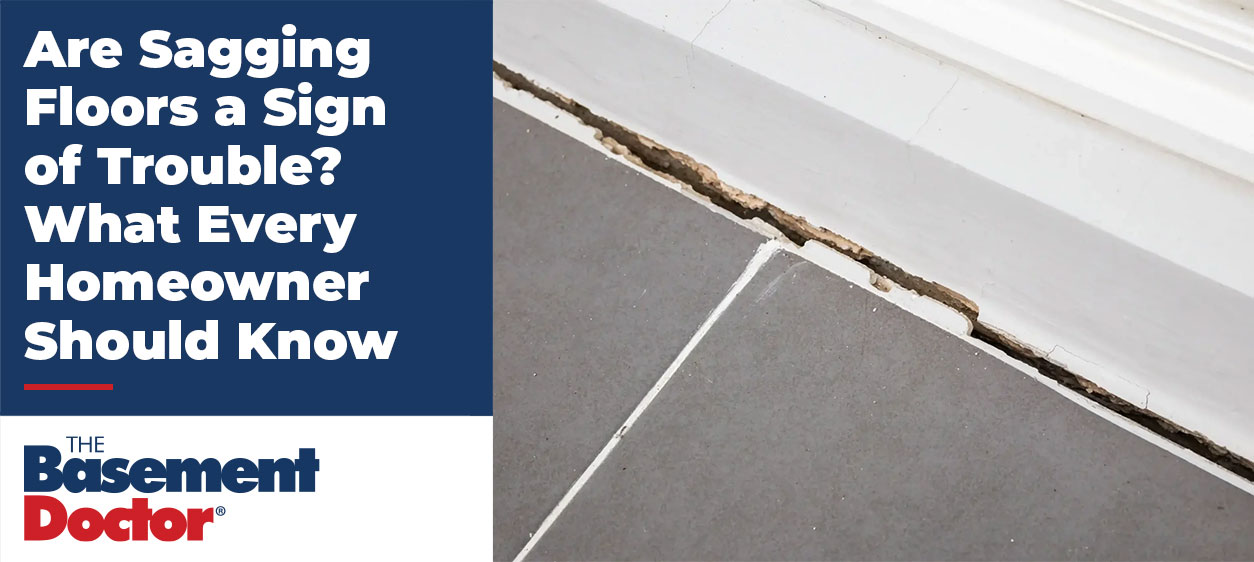
Noticing uneven floors in your home? Even subtle signs like small gaps between baseboards and flooring can indicate potential structural issues that need immediate attention. As experts in sagging floor repair, we understand how concerning these problems can be for homeowners.
Your family’s safety depends on structurally sound floors. When left unchecked, sagging floors can compromise your home’s integrity and create hazardous conditions. Whether you’re searching for “sagging floor repair near me” or wondering “are sagging floors dangerous,” addressing these issues promptly is crucial.
For over 30 years, The Basement Doctor has helped homeowners fix sagging floor problems, particularly in older homes where sagging floor joists commonly occur. Our expertise in sagging floor repair, especially in crawl spaces, ensures your home receives the professional care it deserves.
How to Recognize Sagging Floors
Uneven or Sloping Surfaces
Watch for these key indicators:
- Floors tilting in one direction, often from foundation settlement
- Center areas sagging like a hammock, typically from damaged floor joists
- Raised areas that could indicate soil issues underneath
Soft or Bouncy Spots When Walking
Healthy floors should feel solid. If you notice:
- Springy or spongy areas underfoot
- Unusual noises like creaking or popping
- A trampoline-like sensation while walking
These symptoms warrant professional inspection.
These symptoms often indicate compromised support structures beneath your floors. When floor joists are damaged or improperly spaced, they can’t effectively support weight, creating that concerning bouncy feeling that requires professional evaluation.
Gaps Between Floor and Baseboards
Watch for visible gaps where your floor meets the wall. These typically form as floors pull away during settlement or sagging. While minimal spacing between baseboards and flooring is normal, widening gaps in certain areas signal potential structural issues that worsen over time.
Differences in Older vs. Newer Homes
Age matters when evaluating floor issues. Homes over 100 years old naturally develop some unevenness through decades of settlement. However, newer construction showing similar signs typically indicates problems needing immediate sagging floor repair.
What Causes Floors to Sag
Understanding the root causes helps address structural issues effectively. Sagging typically stems from problems with your home’s support system.
Damaged or Undersized Floor Joists
Floor joists are crucial structural elements. When damaged or improperly sized, they fail to provide adequate support. Older homes often have wider joist spacing that weakens over time. Previous renovations involving cut or notched joists can create vulnerable points prone to failure.
Wood Rot From Moisture
Moisture is particularly destructive to floor structures. When water penetrates wood supports, deterioration accelerates rapidly. Even high humidity levels can compromise wood fibers, especially in poorly ventilated crawl spaces where moisture content exceeds 19%.
Pest Damage
Wood-destroying insects silently weaken floor structures from within. Termites tunnel through floor joists seeking cellulose, creating honeycomb patterns that compromise load-bearing capacity. Powderpost beetles lay eggs in wooden beams, producing larvae that eat through the wood’s interior.
These pests target critical structural components like rim joists and floor supports. The damage often remains hidden until significant sagging floor issues develop, making regular inspections crucial.
Foundation Settlement or Shifting Soil
Your home’s foundation directly impacts floor stability. When soil shifts or settles unevenly beneath the foundation, it creates voids allowing portions of your home to sink. This differential settlement misaligns floor structures, causing sloping surfaces.
Soil movement from moisture changes drives this issue, especially in clay-rich areas. Repeated shifting gradually removes supporting soil beneath your home and leads to foundation repair.
Poor Drainage and Water Accumulation
Water buildup around foundations creates pressure on basement walls and footings. This constant force leads to cracking and shifting of load-bearing elements. Poor drainage causes soil erosion beneath foundations, accelerating structural movement.
Aging Materials in Older Homes
Pre-1970s homes often lack modern protective features like pressure-treated lumber, making structural components vulnerable to moisture and insects. These homes weren’t designed for today’s heavier materials. Natural aging compounds these issues as materials deteriorate over decades. While some settling is normal in historic homes, progressive sagging requires professional sagging floor repair.
This misalignment occurs when foundation movement forces door frames out of square. When these issues appear alongside sagging floors, they indicate widespread structural concerns affecting your entire home.
Tripping Hazards and Safety Concerns
Sagging floors create real safety risks for your family. The uneven surfaces become dangerous tripping hazards, particularly for children and elderly residents.
These hazards can lead to serious injuries. In extreme cases, the floor’s weight-bearing capacity may be compromised. While immediate collapse is rare, structural issues worsen without proper sagging floor repair.
How Delays Increase Repair Costs
Ignoring sagging floor joists triggers cascading structural problems. Minor floor sagging quickly evolves into major issues affecting your entire home.
The financial impact grows substantially over time. What starts as a minor sagging floor repair can develop into extensive structural damage requiring costly fixes. Finding “sagging floor repair near me” early prevents escalating problems.
How Professionals Diagnose the Problem
At The Basement Doctor, our professional inspectors approach sagging floor repair systematically, using specialized tools to identify structural issues that untrained eyes might miss.
Visual Inspection of Floor and Structure
Our experts begin with a thorough assessment of your home’s structural elements, including:
- Floor levelness across areas
- Wall alignment and gaps
- Door and window operation
- Baseboard separation
These visual indicators help us determine what’s causing your sagging floors.
Our professional team carefully examines load-bearing components during sagging floor repair. We evaluate joists for proper sizing and span, identifying areas where supports may be inadequate. Our inspection includes checking for wood rot, insect damage, corroded hardware, cracked lumber, and unsuccessful previous repairs.
For particularly challenging sagging floor repair projects, we may bring in structural engineers to analyze weight distribution patterns. This thorough approach ensures we address the root cause rather than just surface symptoms.
We provide clear explanations of any issues found, along with recommended solutions to fix sagging floors effectively.