
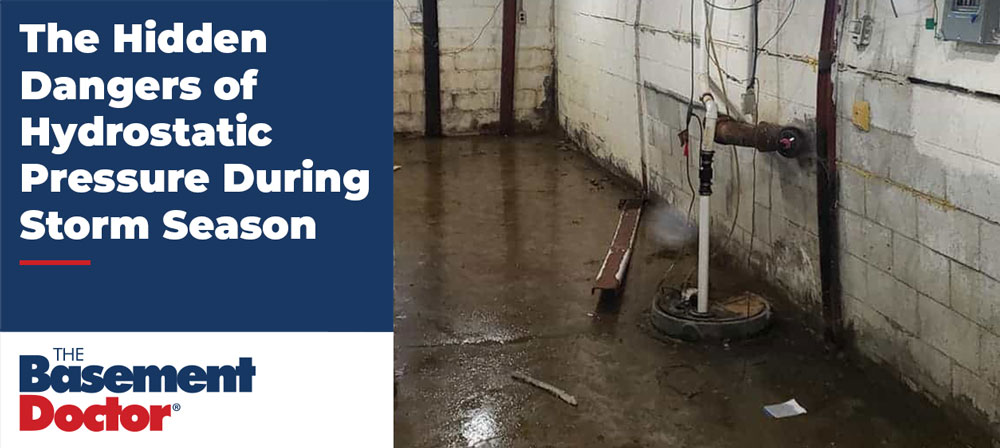
Across our Central Ohio service areas, we’ve witnessed hundreds of basement water emergencies where hydrostatic pressure creates severe foundation complications. During storm season, saturated ground generates massive force against foundation walls—often building pressures exceeding 100,000 pounds pressing continuously against concrete structures.
This relentless hydrostatic pressure from waterlogged soil causes foundation cracks, forces water infiltration through seemingly solid concrete, and can push basement walls to bow dangerously inward. Many homeowners overlook these early warning indicators until they’re confronting major structural problems.
At Basement Doctor Columbus, we’ve discovered that foundation and moisture damage repairs consistently represent the most expensive home improvement projects. Postponing repairs on these concerns only multiplies your total costs.
The Science Behind Water Pressure and Foundation Damage
Hydrostatic pressure refers to the force generated when groundwater accumulates against foundation walls. Since water weighs roughly 60 pounds per cubic foot, thousands of gallons generate continuous force against basement structures.
Central Ohio’s distinctive soil makeup creates unique foundation challenges. Our area’s clay-rich soils hold moisture significantly longer than sandy soil varieties. When clay soaks up water, it swells substantially—then shrinks during dry spells. This continuous swelling-shrinking cycle stresses foundations beyond typical hydrostatic pressure problems.
Poor drainage systems trigger more foundation damage than almost any other element. When water cannot drain effectively away from homes, it saturates surrounding soil. This water-saturated earth loses structural stability and dramatically increases hydrostatic pressure against concrete walls.
Multiple drainage issues worsen these pressure concerns: blocked gutters channeling water toward foundations, incorrect yard grading that slopes toward homes, and elevated water tables maintaining soil saturation throughout the year.
Properties built before current construction codes face heightened vulnerabilities. Homes constructed before the 1980s frequently lack modern drainage infrastructure and waterproof barriers that are standard in contemporary construction.
Deteriorating concrete creates additional weaknesses. Underground moisture pushes water vapor through these weakened sections, allowing walls to absorb dampness constantly.
Increased hydrostatic pressure forces water seepage through what appears like solid concrete. Water finds microscopic pathways invisible to property owners. Precipitation, humidity, and groundwater penetrate through tiny openings in foundation materials.
This progressive seepage often goes unnoticed initially. However, water-saturated soil surrounding foundations intensifies basement moisture concerns. Water migrating through porous concrete establishes perfect conditions for mold growth and structural breakdown.
Common Water Entry Points in Your Basement
Water infiltrates basements without dramatic flooding incidents. Hydrostatic pressure creates hidden entry points most property owners never identify until they’re confronting serious damage.
Where Water Finds Its Way Inside
Basements contain specific vulnerable locations that water targets initially. The most critical vulnerability? The cove joint where floors meet walls—a seam that creates an inherent structural weakness.
This vulnerable seam becomes even more problematic when hydrostatic pressure builds during Central Ohio’s heavy rainfall periods. Contractors excavate substantial amounts of earth during foundation installation, then replace this soil around your completed basement. This replaced backfill material behaves entirely differently compared to undisturbed native ground. Rainwater penetrates this loosened backfill and pools around your foundation walls exactly like water gathering in a clay vessel. This accumulation generates tremendous hydrostatic pressure against basement walls, forcing moisture through every weakness it locates.
Moisture Problems Without Visible Foundation Cracks
Water penetrates your basement even when foundation walls show no apparent cracks or structural failures. Throughout Central Ohio’s wet seasons, elevated groundwater levels generate hydrostatic pressure that pushes dampness directly through concrete or forces it upward through basement floors. Those microscopic passages we mentioned? They become active moisture channels, permitting water movement through what appears like completely solid concrete.
Minor foundation cracks that seem harmless during dry periods can widen substantially when hydrostatic pressure intensifies.
Water-saturated earth surrounding your foundation increases dramatically in both mass and volume, creating inward hydrostatic pressure against walls. Deeper basements combined with saturated conditions generate greater pressure accumulation. This force produces shifting, bowing, cracking, or bulging that compromises your foundation’s structural integrity.
Clay-heavy soils create exceptional challenges because they expand significantly when saturated and contract during dry periods. This constant expansion-contraction cycle stresses foundation structures, enlarging existing cracks and generating new vulnerable areas where hydrostatic pressure can exploit weaknesses.
A bowing wall that remains unaddressed will ultimately crack or fail completely. Walls displaying bowing exceeding 2 inches require wall anchor installations or helical tieback systems to prevent complete structural failure from hydrostatic pressure.
The Financial Impact of Delaying Foundation Repairs
Taking immediate action creates substantial differences in repair expenses. A small crack repaired promptly might cost $200 to $800 for professional repair before hydrostatic pressure worsens the damage.
Continuous Moisture on Wall or Floor Areas
Discovering basement walls that feel damp and cool to the touch? That dampness originates from hydrostatic pressure forcing moisture through your foundation from exterior earth. Concrete naturally absorbs and releases moisture continuously, causing walls to feel somewhat damp during elevated humidity periods and increased hydrostatic pressure situations.
You might observe walls feeling cool, air feeling thick, or dampness without visible standing water. Water seeping from walls, floor puddles, and humid environments all signal hydrostatic pressure transferring moisture from outside.
Paint Failure, Efflorescence, and Mineral Deposits
Observing white, chalky deposits on basement wall surfaces? That’s efflorescence—mineral salts drawn to surfaces when hydrostatic pressure forces water through masonry materials. Paint deterioration follows quickly, with coatings bubbling and flaking within months.
Efflorescence presents no immediate health dangers, but it exposes hydrostatic pressure problems that cause serious foundation damage. When hydrostatic pressure drives moisture through wall surfaces and evaporation occurs, mineral deposits remain while water absorption persists underneath. This creates concentrated salt accumulation generating 2,000–3,000 psi force—surpassing concrete’s load-bearing capacity.
Musty Smells and Mold Development
Basement odors indicate moisture complications stemming from hydrostatic pressure. Elevated humidity establishes ideal conditions for mold growth on wood framing, drywall, storage items, and floor surfaces—aggravating allergies and respiratory conditions.
Earthy smells signal mold thriving in moisture-rich environments created by hydrostatic pressure. Inadequate ventilation traps humidity, establishing spaces where microorganisms and mold multiply, releasing compounds that produce musty odors.
Water Pooling Near Foundation Perimeter or Drainage Areas
Water pooling near foundation perimeter or drainage areas demonstrates hydrostatic pressure overwhelming your basement’s protective capacity. Blocked gutters, incorrect grading, clogged discharge lines, sump pump failures, and rising water tables all contribute to standing water problems caused by hydrostatic pressure.
How Professional Basement Waterproofing Eliminates Hydrostatic Pressure Problems Permanently
Professional basement waterproofing tackles hydrostatic pressure at its source—preventing foundation damage before it starts. We install proven systems that redirect water away from your property, eliminating flooding and structural damage permanently.
Interior Drainage Systems That Work
Interior drainage installations along your basement perimeter capture water before hydrostatic pressure forces it through your foundation. We position perforated drainage pipes in trenches beside foundation walls, channeling groundwater directly to sump basins before hydrostatic pressure can cause damage.
This method costs considerably less than exterior excavation, requires less installation time, and preserves your existing landscaping. Interior systems resist blockages from soil and root penetration that commonly affect exterior methods.
Sump Pump Systems and Proper Water Removal
Sump pumps automatically remove accumulated water that hydrostatic pressure drives into your basement. Proper discharge placement moves water 10-20 feet away from your foundation perimeter. We install discharge lines below frost depth (approximately 40 inches in Central Ohio) to prevent winter freezing problems. Battery backup systems ensure continuous operation during power outages when hydrostatic pressure remains active.
Foundation walls displaying cracks or bowing alongside wet areas demand immediate professional evaluation. Repeated basement flooding indicates serious foundation problems from hydrostatic pressure requiring professional waterproofing methods.
Persistently damp basement floors need professional inspection to identify moisture sources and hydrostatic pressure levels. That persistent musty smell indicates mold presence—a waterproofing professional eliminates the underlying hydrostatic pressure cause.
Addressing these hydrostatic pressure issues early results in simpler, more affordable repairs.
Why Professional Waterproofing Delivers the Most Reliable Solutions
Professional waterproofing contractors bring the knowledge and specialized equipment to accurately diagnose and resolve hydrostatic pressure complications. We identify the actual source and fix it permanently.
Guaranteed Results
Professional installations include warranties spanning 10+ years, with certain contractors offering lifetime protection. Look for transferable warranties covering materials and workmanship combined.
Don’t wait for severe weather to strike. Contact The Basement Doctor today for your complimentary property assessment.
Schedule your appointment with our certified specialists. We’ll determine your best hydrostatic pressure solution.