
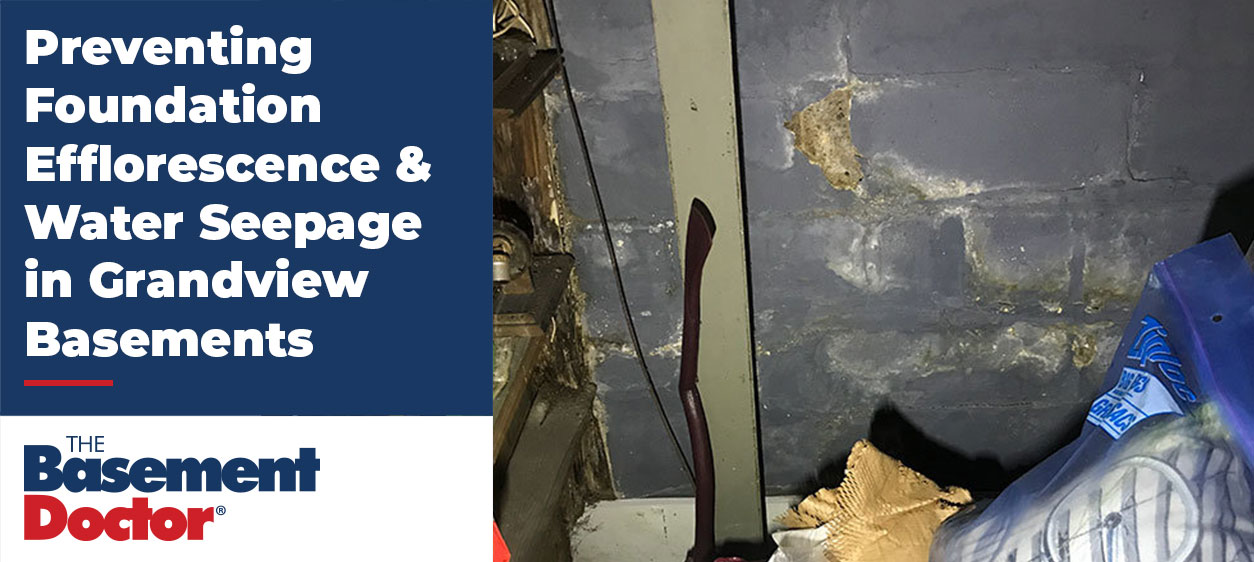
That white, chalky residue on your basement wall is more than an eyesore — it’s a warning sign worth taking seriously. Foundation efflorescence in Grandview basements forms when water seepage carries dissolved minerals through porous concrete walls, leaving behind a powdery crust at the surface. Grandview’s clay-heavy soil makes this worse, expanding and cracking with each wet-dry cycle and pushing moisture through foundation walls under pressure. Left unchecked, the ongoing seepage can eat away at mortar, create conditions ripe for mold growth, and point to deeper structural concerns.
Your home is one of your biggest investments — and we understand that a stain on the basement wall can mean a lot more than it appears. As Grandview’s trusted local basement waterproofing experts, we’re here to help you understand what’s behind these deposits, how to tell efflorescence apart from mold, and what proven steps — from grading corrections to interior drainage systems — keep Grandview basements dry year-round.
Quick Answer: What Causes Efflorescence in Grandview Basements?
Water seepage through basement walls is the direct cause. As moisture travels through porous concrete and evaporates at the surface, it leaves behind dissolved mineral salts — showing up as white powder on basement walls and floors.
How water carries minerals through concrete and leaves white deposits
Concrete is porous. Water moves through tiny capillaries from the soil side of a foundation wall toward the interior, dissolving soluble salts from the concrete, mortar, and surrounding soil along the way, then depositing them as crystalline residue on the wall surface. Common entry points include foundation cracks, the wall-floor joint, or the porous concrete itself.
Not sure if what you’re seeing is efflorescence? Splash a little water on the stain. Efflorescence will dissolve, at least temporarily, while mold won’t react the same way. Over time, exposure to carbon dioxide in the air can harden fresh mineral deposits into a water-insoluble crust that’s tougher to clean.
Efflorescence vs. mold: texture, color, and smell
Knowing the difference matters. Efflorescence feels dry and chalky, crumbling to dust between your fingers. Mold feels damp, fuzzy, or slimy. Color is another clue — efflorescence stays white or off-white, while mold ranges from white to gray, green, or black. Smell settles the question entirely: efflorescence has no odor, but mold carries a musty, earthy smell tied to active biological growth.
Other seepage signs: damp patches, peeling paint, musty smells, and visible water
Efflorescence rarely shows up alone. Watch for these warning signs alongside white deposits:
- Damp patches or discoloration on basement walls and floors
- Peeling, bubbling, or flaking paint where moisture breaks the bond between paint and concrete
- A persistent musty smell, even without visible staining
- Standing water or visible seepage along walls after heavy rain
Why recurring moisture can damage mortar and support mold growth
Moisture that keeps moving through walls doesn’t just leave residue — it causes real damage. Migrating salts can crystallize beneath a sealed or painted surface instead of on top of it, a process called cryptoflorescence, and the pressure from that crystal growth can crack and spall masonry. That same moisture creates exactly the conditions mold needs; indoors, mold can begin developing within just 24 to 48 hours of sustained dampness.
Where to learn more: the full efflorescence guide
Our efflorescence basement walls guide breaks down every mineral salt involved and the full removal process. For Grandview homeowners, the more pressing question is why moisture keeps pushing through foundation walls in the first place — and that starts with understanding the pressure building up outside them.
Why Some Grandview Foundations Face More Water Pressure
Not every Grandview home deals with the same moisture challenges. The difference usually comes down to how water moves across your lot and through the ground before it ever reaches your foundation wall.
How lot slope and drainage direct runoff toward a foundation
A yard that slopes toward the house works against you on every rainy day. Instead of moving water away from the foundation, it channels runoff straight into it. Blocked gutters, poor surface drainage, and downspouts discharging too close to the wall all add to the volume of water pressing against concrete. Soil that has settled over the years can flatten what was once a proper grade, quietly turning a foundation that never had problems into one that now battles water seepage basement walls every storm season.
Clay-heavy soil and older foundations: conditions to check at your home
Grandview Ohio clay soil holds moisture far longer than sandy or loamy ground — and that matters. Clay swells when wet and shrinks when dry. That repeated cycle presses hard against basement walls during storms, then pulls away during dry spells, leaving gaps where water collects and finds its way in. Older homes carry added exposure here. Block walls built before modern drainage codes simply weren’t designed with today’s basement wall water barrier standards in mind.
Groundwater pressure during wet weather
Saturated soil places real force against basement walls and floors — and that force climbs fastest after heavy rain or a spring thaw. The concern goes beyond surface dampness. Increased pressure can bow walls, widen existing cracks, and push water through concrete even where no visible opening exists. Our hidden dangers of hydrostatic pressure guide explains how this force builds over time and what it takes to stop it before structural damage sets in.
Big Walnut Creek flood exposure: confirm your property’s location and flood risk
Proximity to Big Walnut Creek raises flood probability — and FEMA flood zone designations reflect that reality. Zone A properties carry a 1% annual flood chance, which translates to roughly a 1-in-4 likelihood over the life of a 30-year mortgage. Confirming your Grandview property’s flood zone is a practical first step toward understanding how much added foundation moisture Grandview homes in your area may face. Our Grandview service page addresses this directly.
How to Prevent Efflorescence and Water Seepage
Fixing foundation efflorescence in Grandview basements means addressing the source of moisture — not just the surface stain. Here’s where to start.
Improve grading, gutters, and downspout discharge
Water that pools against your foundation is water that finds a way in. Slope soil at least six inches over the first ten feet away from the foundation, clean gutters twice yearly, and extend downspouts at least 10 feet from the wall. These exterior fixes cut water seepage along basement walls before it ever reaches the concrete.
Seal foundation cracks after checking for movement
Not all cracks are the same. Check first for widening or displacement — stable cracks take hydraulic cement or polyurethane injection, while cracks that are actively shifting need a professional evaluation before any sealing begins.
Choose wall water barriers suited to your moisture source
Dampproofing sprays, exterior membranes, and basement wall water barriers each serve a different purpose. The right choice depends on whether moisture is entering as vapor or liquid water — our experts help you match the solution to the actual source.
Use interior drainage and a sump pump to manage incoming water
Sometimes water gets through regardless. An interior drainage system paired with sump pump installation captures wall and floor seepage, moving 30 to 65+ gallons per minute safely away from your foundation.
Protect finished surfaces with a vapor-control system
A properly installed vapor barrier system — including bubble-wrap wall coverings where applicable — blocks vapor from reaching finished surfaces while channeling any seepage into perimeter drains.
Maintain drains, test sump pumps, and check walls after heavy rain
Prevention doesn’t stop after installation. Test your sump pump quarterly and inspect walls after major storms to catch early warning signs before small issues become bigger ones.
When to Call The Basement Doctor: Inspection and FAQs
White deposits coming back after cleaning? Standing water, widening cracks, or walls that stay damp through dry weather? Those are signs it’s time to move past DIY fixes and get a professional set of eyes on your foundation.
Returning deposits, visible water, or cracks: request a source-first inspection through our Grandview service page
We start every Grandview inspection by identifying the actual moisture pathway — not just treating what’s visible on the surface. From there, we build a plan around interior drainage, sump pump installation, or foundation crack sealing based on exactly what we find. Our experts will take care of it. Request a source-first inspection through our Grandview service page.
Is efflorescence dangerous on its own?
The mineral deposits themselves rarely pose a direct hazard. But they confirm water is moving through your wall in ways it shouldn’t. That’s the concern worth addressing.
Can I clean off efflorescence without fixing the seepage?
You can brush or wash away the white powder, but it comes back as long as moisture keeps traveling through the concrete. Cleaning the surface without fixing the source is a short-term answer to a long-term problem.
Does living near Big Walnut Creek increase my home’s water risk?
Homes along Big Walnut Creek’s sloped terrain face higher groundwater runoff toward foundations compared to flat parcels. If your property sits in that area, it’s worth knowing your FEMA flood zone designation.
Does efflorescence mean mold is also present?
Not always — but both share the same root cause. Uncontrolled moisture often supports both conditions at once, which is why getting ahead of water seepage protects your basement on more than one front.
How do I know whether my Grandview home needs waterproofing?
Recurring deposits, a persistent musty smell, or cracks wider than 1/8 inch are all signals worth taking seriously. A professional basement waterproofing evaluation gives you a clear picture of what’s happening and what it takes to fix it for good.
Conclusion
That white stain on your basement wall is telling you something — and it’s worth listening to. The good news? Foundation efflorescence and water seepage in Grandview basements are problems we know how to fix. Grading corrections, crack sealing, and a properly installed interior drainage system get to the actual source of moisture, not just the surface signs it leaves behind.
We start every Grandview inspection by identifying where water is entering your foundation — then build a plan around what we actually find. Grandview homeowners, request your source-first inspection through our Grandview service page and take the first step toward a drier, healthier home.