
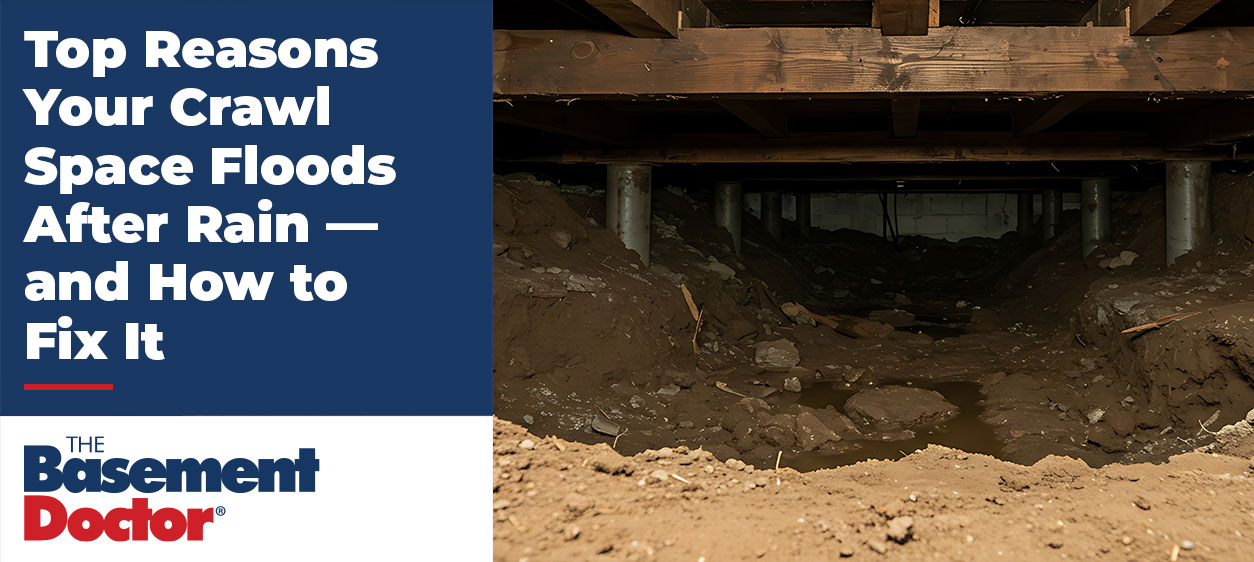
Discovering a flooded crawl space after rain isn’t something to ignore. Standing water under your house signals drainage or moisture-control issues requiring immediate attention. Left unaddressed, a flooding crawl space can lead to structural damage, mold growth, and costly repairs.
The U.S. EPA warns that water-damaged areas must be dried within 24–48 hours to prevent mold growth after crawl space flooding. At The Basement Doctor, we’ve spent 30+ years helping Columbus homeowners address crawl space flood repair needs. Even minor flooding in crawl spaces can significantly damage Ohio homes. Water typically enters through various pathways during heavy rain, requiring targeted solutions.
Your home needs protection from crawl space flooding. Let us help you understand and fix the problem before water compromises your home’s structure.
Why Crawl Spaces Flood After Heavy Rain
Your crawl space plays a vital role in your home’s foundation system. We’ve helped countless Columbus homeowners resolve flooded crawl space issues that proper maintenance could have prevented.
How Crawl Spaces Work and Why Water Gets In
Crawl spaces create separation between living space and ground. While designed to stay dry, their below-grade position makes them vulnerable to flooding after rain. A properly functioning crawl space should remain dry in all weather, yet many Columbus homes experience crawl space flooding during rainfall. The design naturally collects water flowing around foundations.
Multiple water sources work together create the biggest problems. A high water table combined with poor exterior drainage overwhelms your crawl space’s defenses.
Signs Water Is Getting into Your Crawl Space
Our experienced team regularly identifies these key indicators of crawl space flooding:
- Musty odors throughout your home’s lower levels
- Rising indoor humidity and window condensation
- Mold growth in the crawl space area
- Soft or sagging floors above affected zones
- Standing water in the crawl space
- Pest problems in damp areas
- Peeling paint above the crawl space
Early detection prevents extensive damage. Don’t wait until water problems silently compromise your home’s structure.
What’s Causing Water Problems in Your Crawl Space?
After helping Columbus homeowners with flooded crawl spaces for over 30 years, we’ve identified the main causes:
Improper Grading Around Your Foundation
The ground must slope away from your foundation. When it slopes toward your home, rainwater flows directly into your crawl space. Your property needs several inches of downward slope extending 5-10 feet from your foundation. Many Columbus homes develop problematic low spots as recently disturbed soil settles.
Clogged or Missing Gutters & Downspouts
A few inches of rain produce thousands of gallons of roof runoff. Without proper gutters and extended downspouts, this water dumps beside your foundation.
Hairline foundation cracks allow water entry when soil becomes saturated. These small openings worsen during heavy rains, with vulnerable areas including vertical wall cracks, mortar joints, and wall-floor connections. Columbus winters create freeze-thaw cycles that expand these gaps.
Vapor Barrier Installation Problems
Poor vapor barriers often worsen moisture issues. Thin 6-mil or 12-mil barriers tear easily and provide minimal protection. Improper installation with gaps or insufficient overlapping traps moisture underneath.
Hidden Plumbing and HVAC Issues
Heavy storms reveal concealed plumbing problems. Even slow supply line drips introduce significant water over time. HVAC systems create condensation in crawl spaces during humid Columbus summers when cool ducts meet warm air.
How Do I Fix a Flooded Crawl Space?
Dealing with a flooded crawl space? Quick action prevents lasting damage. For over 30 years, The Basement Doctor has helped Columbus homeowners resolve crawl space flooding with proven solutions.
Immediate Response: Remove standing water and dry the area
Before entering a flooded crawl space, turn off electricity and gas. Document damage for insurance, then begin water removal using submersible pumps for significant flooding or wet/dry vacuums for smaller amounts.
After water extraction, thoroughly dry the space using professional-grade fans and dehumidifiers. Remove wet insulation that could harbor mold.
A sump pump installation is essential for preventing crawl space flooding. This device activates automatically when water levels rise, directing water away from your home. Choose a model with battery backup for continuous operation during power outages.
Encapsulation: Vapor barrier and dehumidifier
Professional crawl space encapsulation provides lasting flood protection. Install a heavy-duty 20-mil vapor barrier across floors and walls, carefully sealing all seams with quality tape for complete moisture protection.
Add a specialized crawl space dehumidifier like the Santa Fe Advance to maintain 30-50% humidity levels and prevent mold growth in your flooded crawl space.
Ongoing Maintenance: Regular inspections and upkeep
Check your crawl space after heavy rains for signs of flooding. Test your sump pump monthly by adding water to ensure proper activation. Maintain dehumidifier filters and inspect vapor barriers for damage.
Ignoring Crawl Space Water Problems? Here’s What Happens
At The Basement Doctor of Columbus, we regularly see how untreated crawl space flooding damages homes. These issues affect your entire house:
Mold Takes Hold Fast
Mold grows within 24-48 hours in flooded crawl spaces. These spores travel through your home’s air system, causing respiratory issues and allergic reactions. Up to 50% of first-floor air comes from your crawl space.
Your Home’s Structure Weakens
Damp environments attract destructive pests like termites and carpenter ants that damage insulation and wiring while bringing harmful bacteria into your home. The Structural Pest Control Board confirms that most termite infestations begin in moist crawl spaces.
Energy Bills Skyrocket
When insulation gets wet, it loses effectiveness. Wet fiberglass insulation compresses and falls, forcing your HVAC system to work harder and potentially raising energy costs by 15-25%.
Indoor Air Quality Suffers
Crawl space humidity rises through the stack effect, creating musty odors and uncomfortable conditions that can worsen respiratory issues.
Don’t let flooding damage your valuable home investment.
Crawl Space Flooding Risk Factors Ohio Homeowners Should Know
With 30+ years serving Columbus homeowners, we’ve identified key flooding risks:
Clay Soil Properties
Clay soil expands when wet and shrinks when dry, affecting 25% of homes and causing $12 billion in annual damage. It retains water longer, directing moisture to crawl space walls.
Properties with Poor Grading
Crawl spaces naturally collect water. When yards slope toward foundations, rainwater flows directly to your home. Even minor grading issues can direct thousands of gallons against foundation walls during storms.
Older Homes with Outdated Systems
Historic homes often lack modern drainage and use porous materials that allow water penetration. Many have dirt floor crawl spaces that provide direct moisture pathways.
Crawl space flooding poses serious risks to your home’s structure and family health. Even minor water issues after rainfall need immediate attention to prevent costly damage. Understanding common causes like improper grading, clogged gutters, or foundation cracks helps target effective solutions.
As trusted Columbus experts, we know standing water creates ideal mold conditions within 48 hours. Ongoing moisture attracts pests and increases energy costs, especially in homes with clay soil or inadequate drainage.
The Basement Doctor of Columbus brings 30+ years of experience transforming flooded crawl spaces into dry, protected areas. We quickly remove standing water and fix underlying causes through proper grading, drainage systems, and foundation repairs. Our professional encapsulation with vapor barriers and dehumidifiers ensures permanent moisture control.
Call today for your free inspection and lasting crawl space flood repair solutions.